Glass options
Glass does most of the work
Around four fifths of a window is glass. Choosing the right kind decides how warm, quiet, private and safe the room behind it will be.
Energy glass
Warm inside, whatever the weather
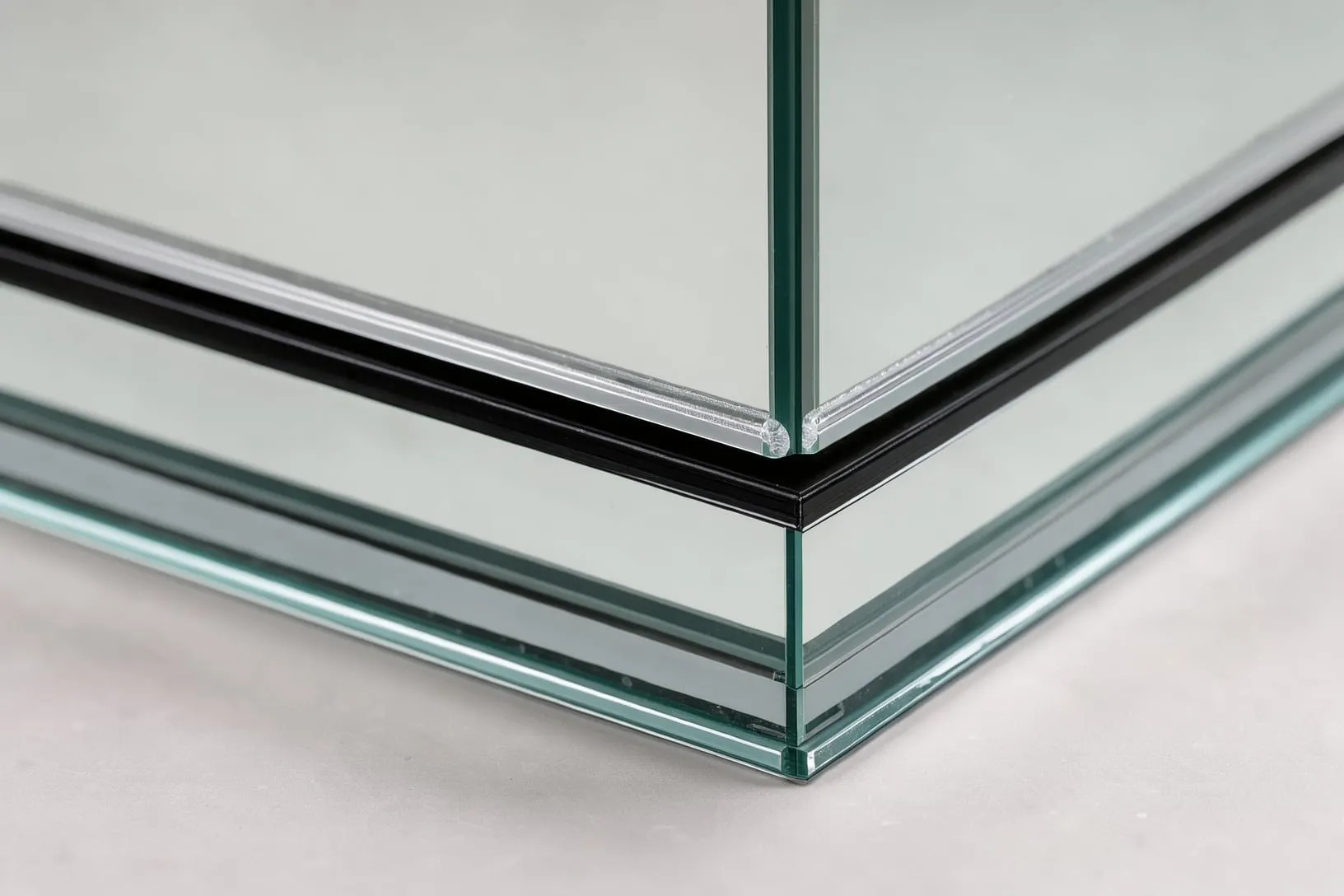
Every window we make is glazed with a 28mm sealed unit as standard: two panes with a low-emissivity coating that reflects heat back into the room, an argon gas fill that slows heat loss, and a warm-edge spacer bar that keeps the perimeter of the glass from turning cold.
Together they give our standard uPVC windows an A energy rating. For north-facing rooms, exposed sites or simply the lowest possible bills, triple glazing adds a third pane and a second insulating cavity.
- Low-emissivity coated inner pane
- Argon-filled cavity
- Warm-edge spacer bars
- Double or triple glazed
Privacy glass
Obscure glass patterns
For bathrooms, front doors and anywhere overlooked. Each pattern lets daylight through while blurring the view, and is rated from 1 (least obscure) to 5 (most).

Clear
No obscuration
Standard clear glass for an uninterrupted view.

Minster
Privacy level 2
A traditional rippled pattern. Light obscuration for hallways and landings.

Contora
Privacy level 3
A flowing, organic texture with moderate privacy.

Stippolyte
Privacy level 4
A fine, even stipple. The dependable all-rounder for bathrooms.

Satin
Privacy level 5
A smooth, frosted finish with a clean modern look and maximum privacy.

Everglade
Privacy level 5
A bold leaf pattern giving maximum privacy with plenty of character.
Safety glass
Where toughened glass is a must
Building Regulations in England require safety glass in what are called critical locations, where someone could fall or walk into the glass. We specify it automatically wherever it is needed.
Critical locations
- Glass in doors, up to 1500mm above floor level
- Glass in side panels within 300mm of a door edge, up to 1500mm above floor level
- Any other glazing that starts less than 800mm above floor level
Based on Approved Document K for England. Toughened glass is heat-treated to be around five times stronger than ordinary glass and breaks into small blunt granules. Laminated glass holds together on a plastic interlayer when broken.
Specialist glass
Glass for particular problems
Acoustic
A laminated pane with a sound-damping interlayer takes the edge off traffic, trains and flight paths. Works best with panes of different thicknesses.
Solar control
A coating reflects a large share of the sun's heat. Close to essential in conservatory roofs and useful for large south-facing doors.
Self-cleaning
An outer coating uses daylight to break down dirt, and rain to rinse it away in a sheet. Ideal for roofs and windows that are hard to reach.
Laminated security
Laminated glass stays in the frame when struck, which slows an intruder considerably. Worth considering for ground floor doors.
At a glance
Which glass, where?
| Room or position | What we suggest |
|---|---|
| Living rooms and bedrooms | Standard A-rated double glazing; triple on cold or noisy elevations |
| Bathrooms and WCs | Obscure glass, privacy level 4 or 5 |
| Front doors and side panels | Toughened or laminated, often obscure or decorative |
| Patio, French and bifold doors | Toughened safety glass throughout; solar control if south-facing |
| Low-level and floor-to-ceiling windows | Toughened safety glass |
| Conservatory and lantern roofs | Solar-control, self-cleaning toughened glass |
| Beside a busy road | Acoustic laminated glass |
Decorative
Bars, leads and bevels
Period homes often call for a little detail in the glass.
Georgian bars
A grid of slim bars sealed inside the unit gives the look of small panes, with a single flat surface to wipe clean.
Astragal bars
Raised bars bonded to both faces of the glass, with spacers between. The most convincing way to reproduce traditional glazing bars.
Leaded and bevelled designs
Square or diamond leads, coloured film and bevelled clusters for top lights, door glass and feature windows.
Need help choosing glass?
Tell us about the room and what bothers you about it now, whether that is cold, noise, glare or being overlooked, and we will recommend the right unit.